Gyun Hur is an interdisciplinary artist and an educator whose experience as an immigrant daughter deeply fuels her practice.
Gyun completed Stove Works Residency, NARS Foundation Residency, Bronx Museum AIM Fellowship, Pratt Fine Arts Residency, BRICworkspace, Danspace Project Platform Writer-in-Residency, Ox-Bow Artist-in-Residency, Vermont Studio Center, and Virginia Center for the Creative Arts. She is the recipient of Foundation for Contemporary Arts Emergency Grant, Part Time Faculty Development Award (Parsons School of Design), Artadia Award, and the inaugural Hudgens Prize. Her works have been featured in Hyperallergic, The Cut, Art In America, Art Paper, Sculpture, Art Asia Pacific, Public Art Magazine Korea, Hong Kong Economic Journal, Yahoo! Tech, Huffington Post, Atlanta Journal-Constitution, Pelican Bomb, Creative Loafing, Jezebel, and The Atlantan. Her interest in art making in public space led her to various artist presentations at the TEDxCentennialWomen, the international street art conference Living Walls: The City Speaks, the Atlanta Contemporary Art Center, The Hong Kong Polytechnic University, The New School, and many others. Gyun has contributed as an artist-writer in fLoromancy, The Brooklyn Rail, and The Forgetory.
Born in South Korea, she moved to Georgia at the age of 13. She currently lives in Brooklyn and teaches at Parsons School of Design, The New School.
“I construct visual and emotional spaces where diasporic narratives of loss and beauty reside. Iterations of installations, performances, drawings, and writings become a collection of autobiographical abstraction and figurative storytelling. In the menial labor of accumulating and transforming materials, I ask myself what holds us together; stories, yearnings, rituals, and spirituality.
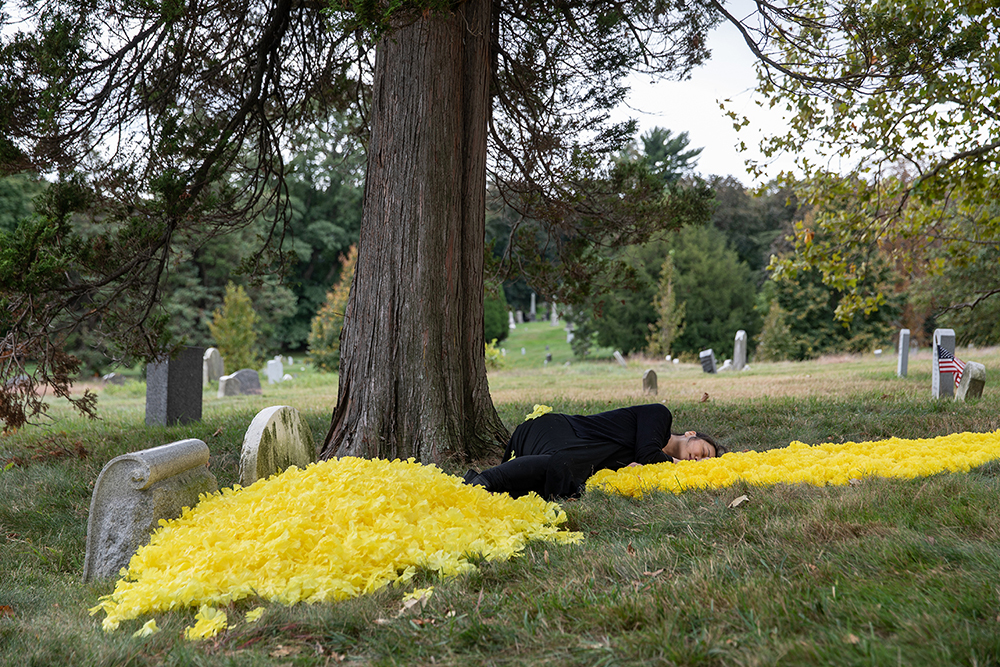
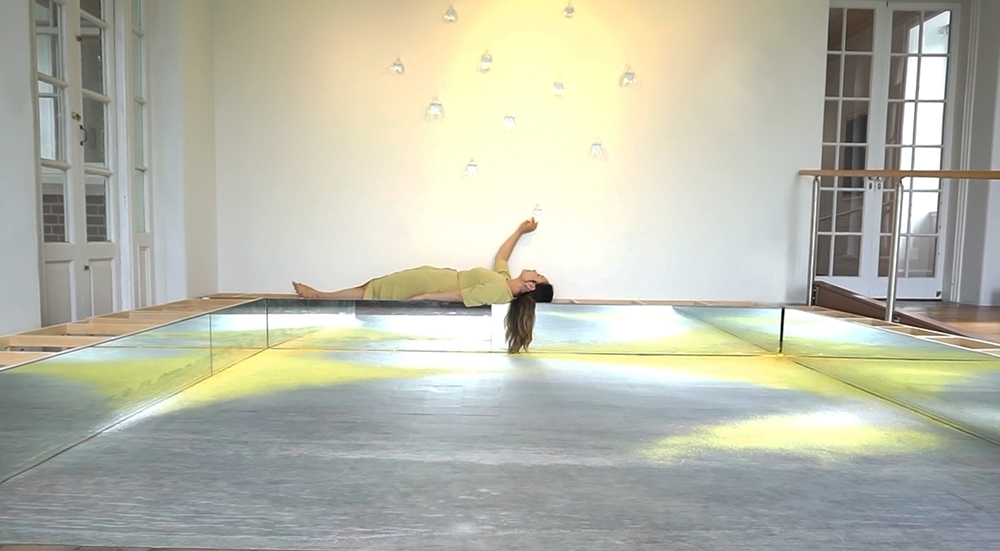
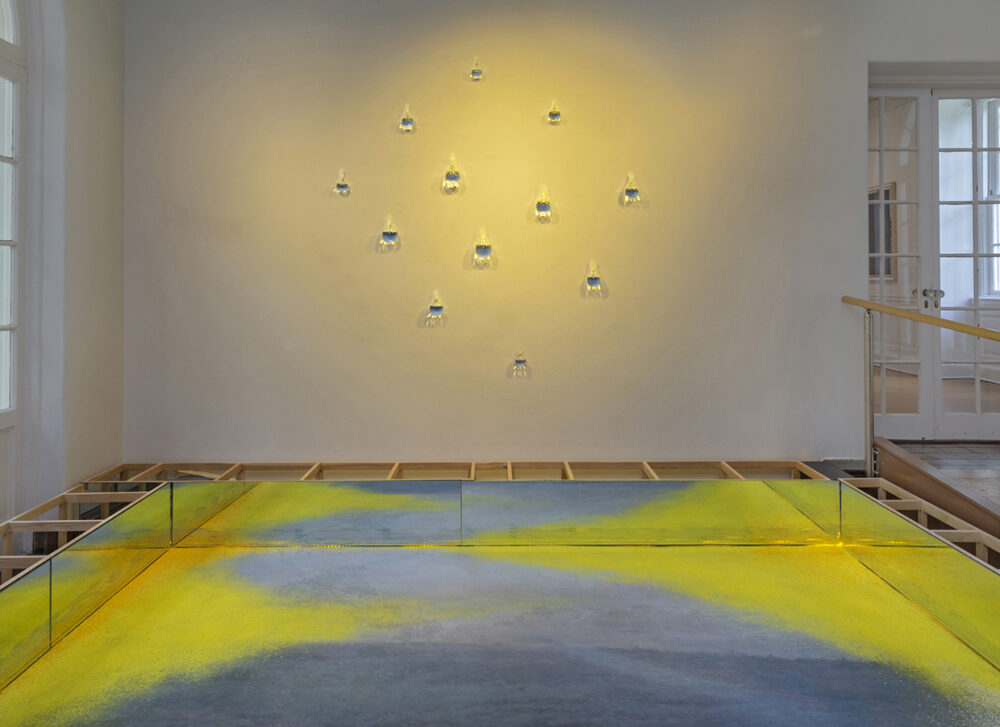
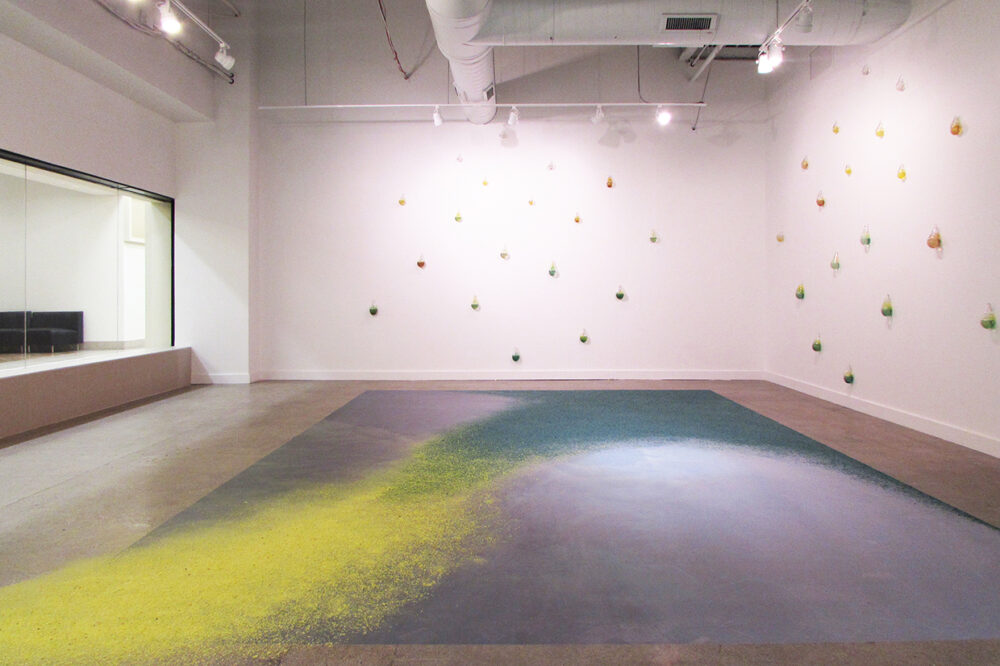
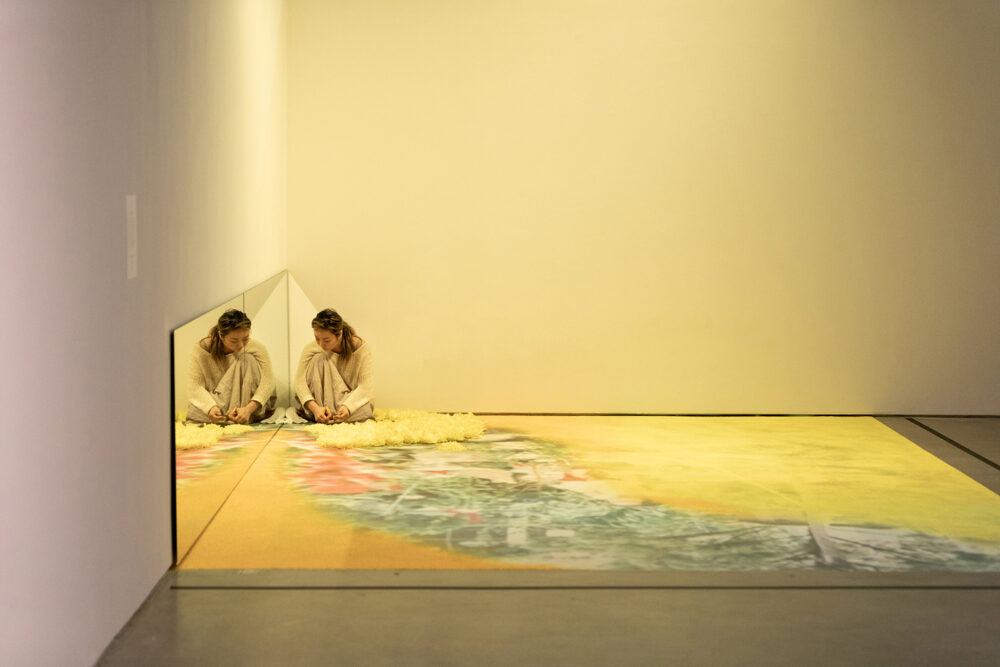
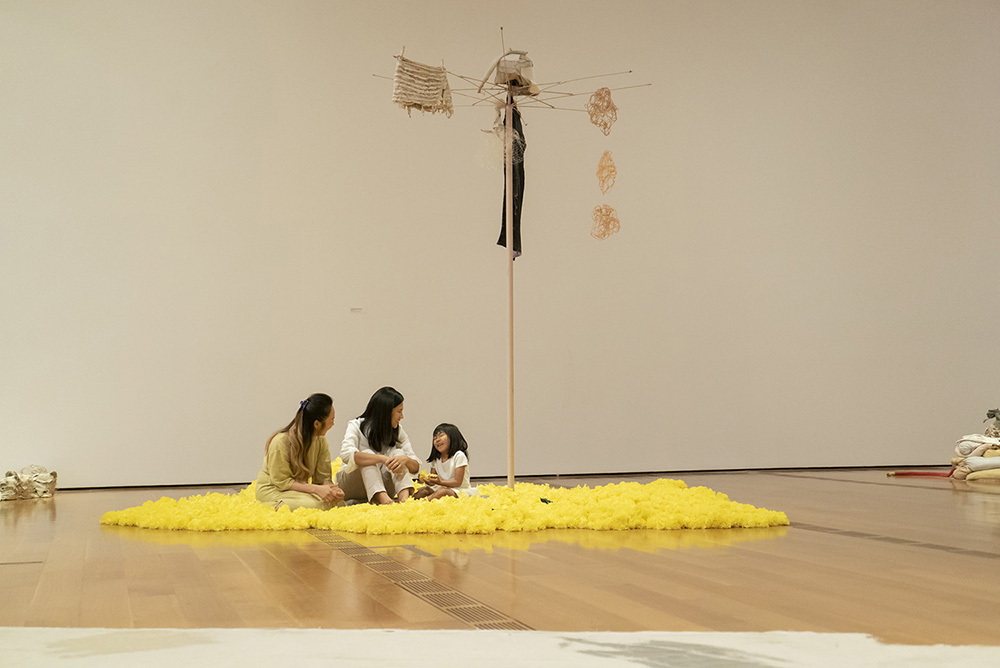
Our (in)capacity to hold ambiguity and how it manifests in melancholia fascinates me. My floor installations with hand-shredded silk flowers remain untethered to the surfaces they illuminate. Disguised by color, their fragility invites an inevitable anticipation and imagination of rupture. My formalistic investigation of beauty holds fragmented stories and materials intact, shifting through the violence that formed the contexts of my own diasporic history. Articulation of unspoken experiences, bodily and emotional, act as poetic incitement for narratives at the periphery.
I have been collecting and hand-shredding silk flowers for about ten years now as the primary material of work. My initial discovery of silk flowers was at cemeteries where they were often discarded after wind or rain plucked them away from their dedications. Their artificiality defies decay, complicating my work in relationship to the fragile and finite nature of life. The long process of turning these silk flowers into a pigment is all done by hand. Imbuing the petals through and with this unforgiving labor, I alter its origins, form, and value. Hand-shredded silk flowers are a transfiguration of my bodily memories.
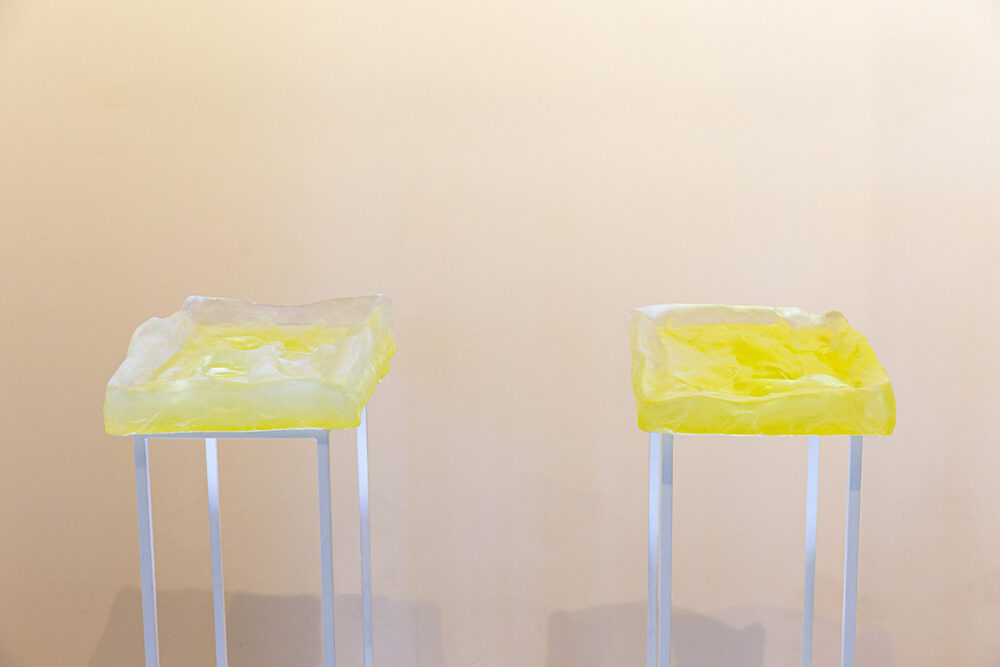
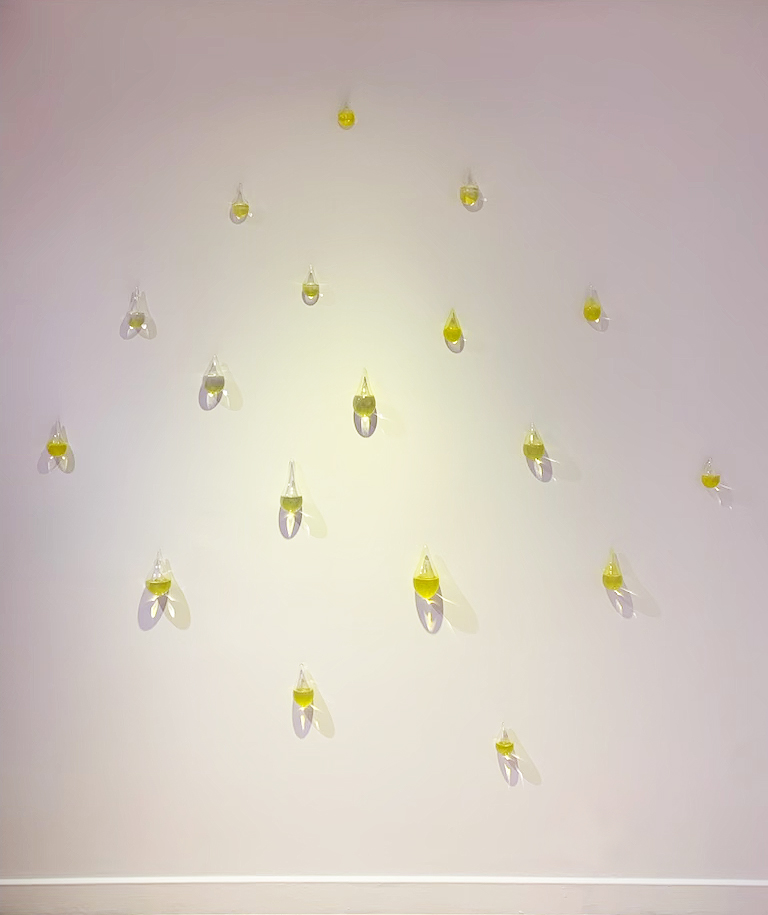
River water and glass have entered my practice as new, centering elements. I am intrigued by the constant movement of the river and how it is teaching me a choreography of grief while generating life. In my childhood memories, rivers were sites of mourning, washing, and rejoicing. In the larger context, rivers hold ecological memories of abundance, eradication, borders, and power.
Most of my works are generated from my life and the prompts that sites or spaces provide for me. I am curious about how one’s intimacy can come in contact with the public. The work then can hold these soft, communal yearnings and memories. As introspection and spectacle overlap in my work, I hold this belief that empathetic vulnerability, protected and sustained, can take place while experiencing my work.”