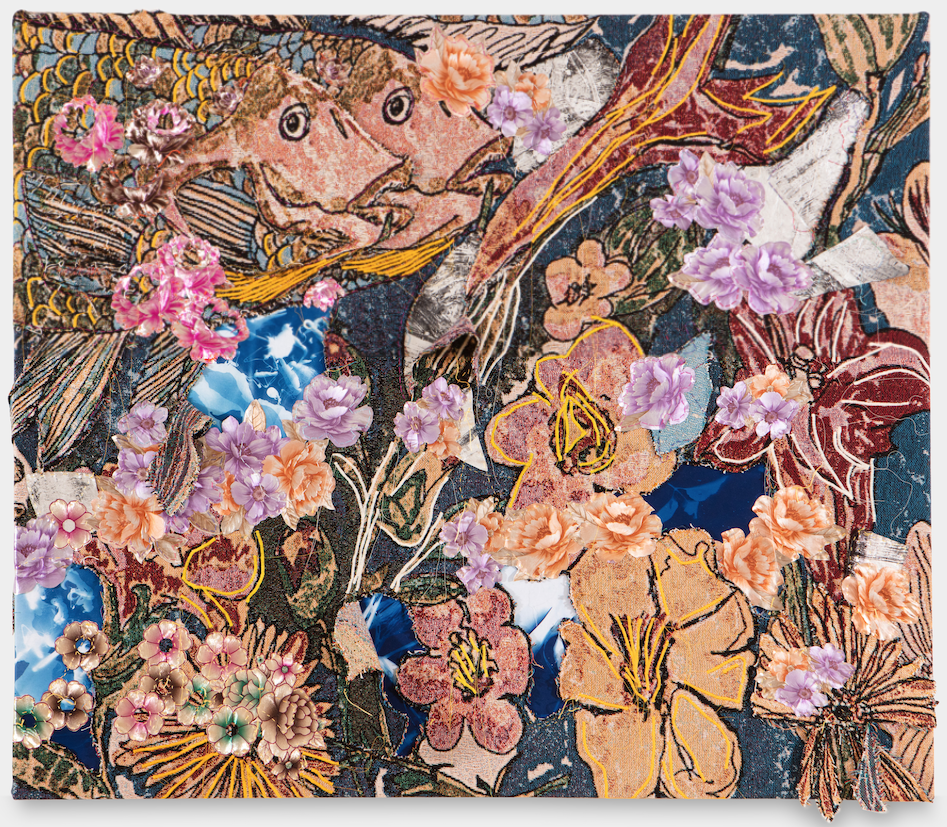
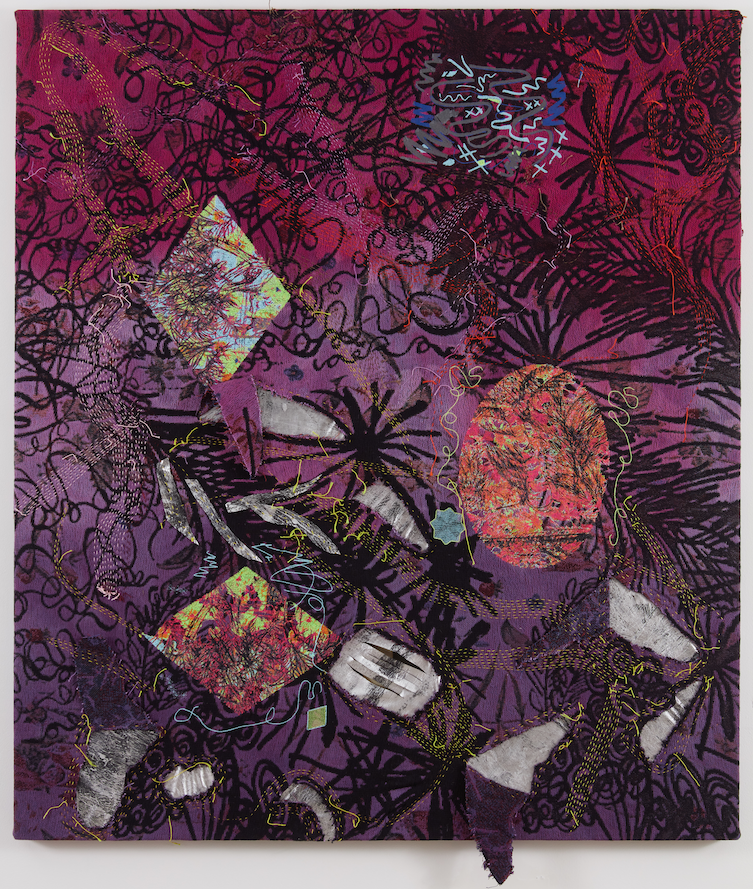
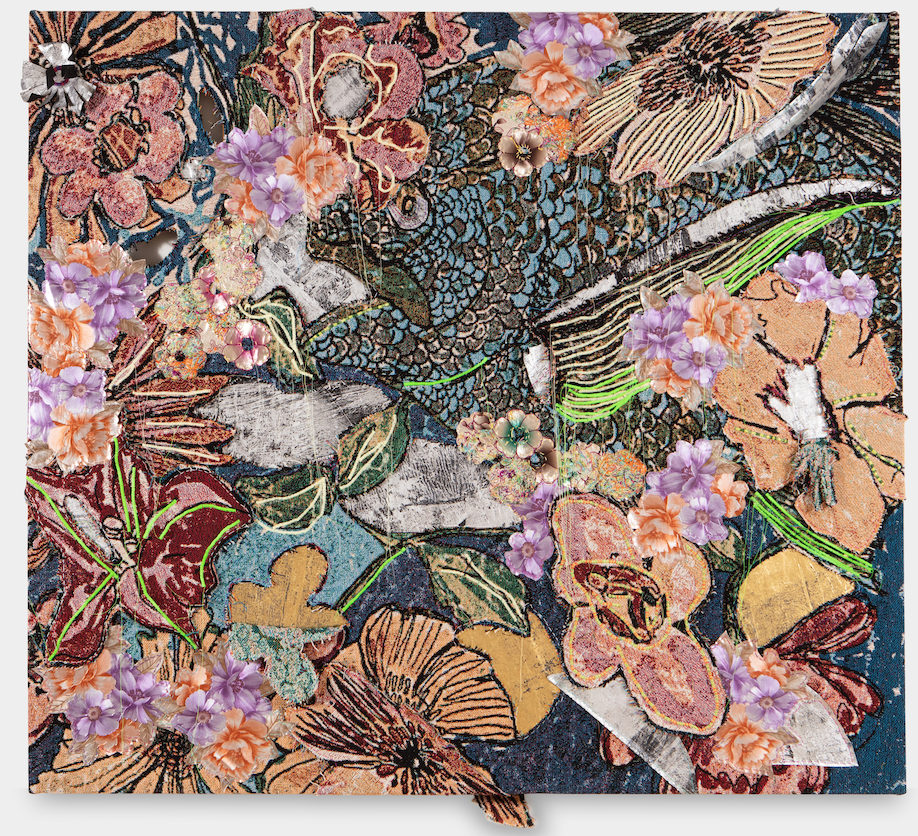
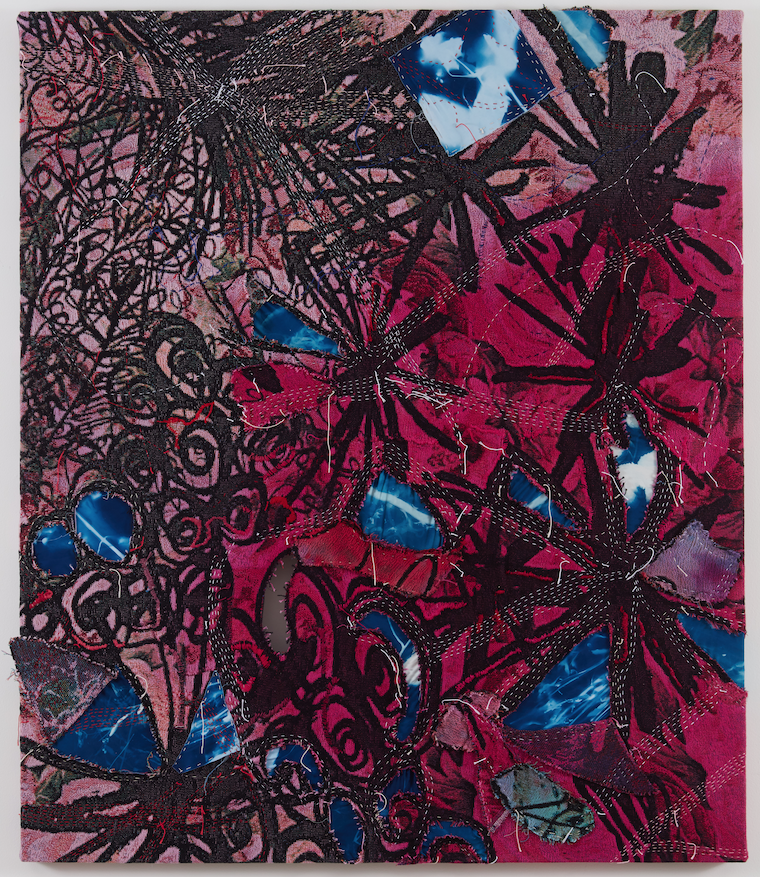
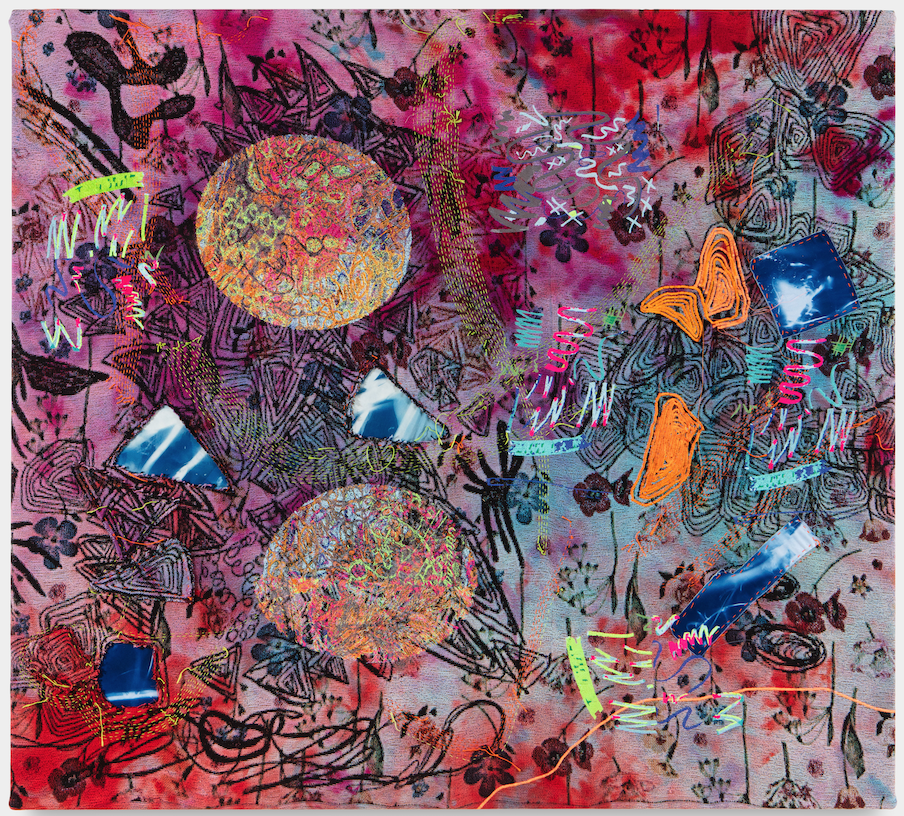
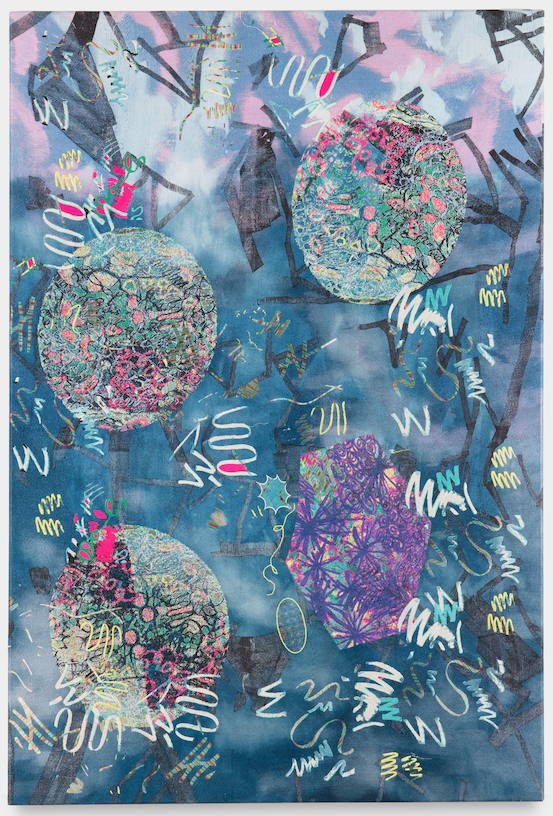
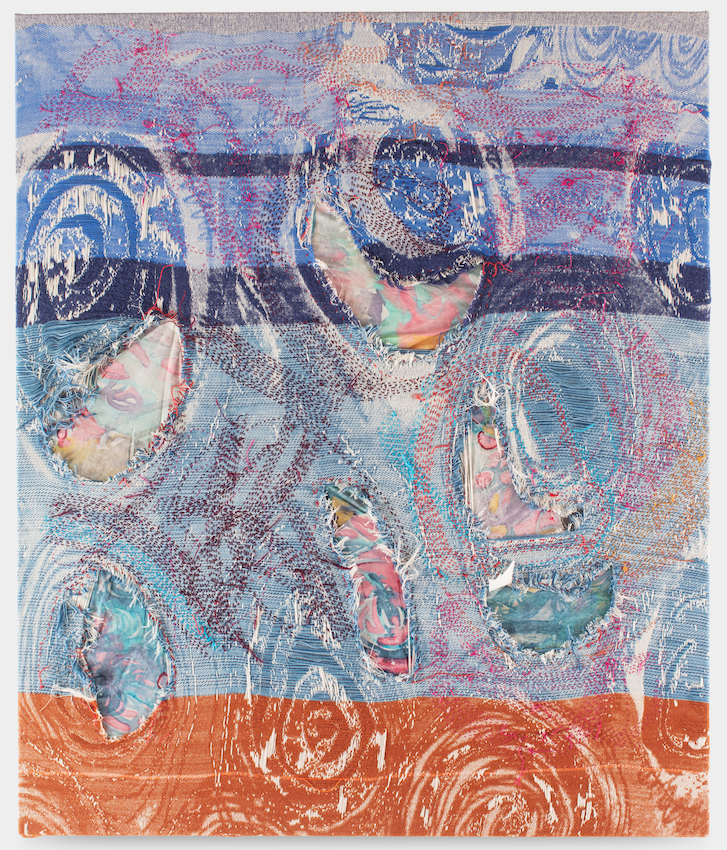
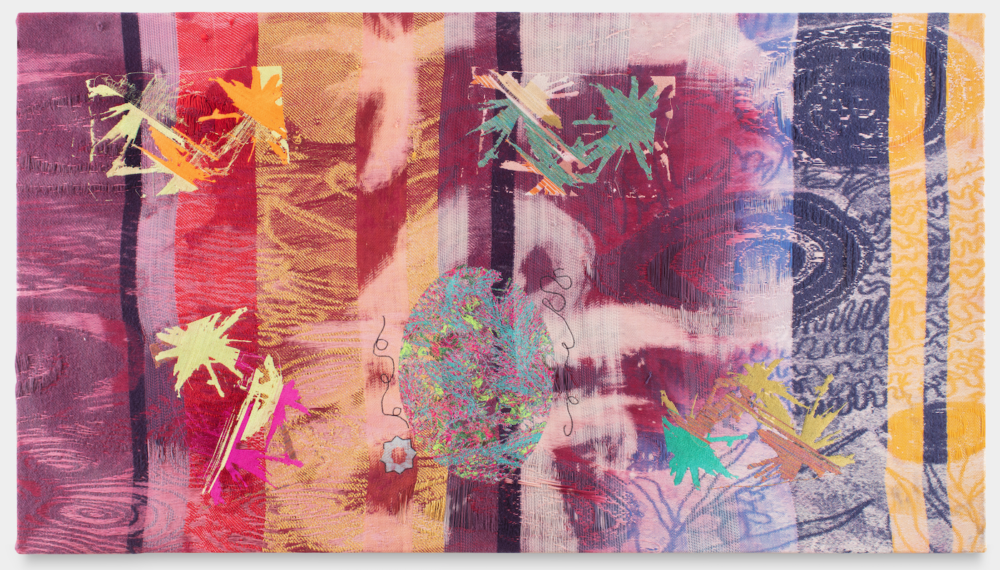
“Melissa Leandro uses textiles to evoke feelings of nostalgia, comfort, and lushness, drawing upon her memories of family homes, flea markets, and tropical landscapes. Though primarily made of fibers, her works also operate as photographs, drawings, maps, portraits, and paintings. Leandro masterfully combines multiple processes – jacquard weaving, embroidery, cyanotypes, and more – to create singular textiles reflective of her complex perspective and lived experiences.” – Mia Lopez, Independent Curator, Chicago
“Leandro’s focus on history, both her own and a collective history, allows her to create thoughtful work that engages people in different ways.” – Jade Powers, Assistant Curator, The Kemper Museum of Contemporary Art
Melissa Leandro (b. 1989, Miami, FL) explores her cultural identity and family memories to create vibrantly layered, topographical textile works filled with her drawn and collected imagery. Her textile works are vibrant, animated and heavily layered through traditional and non-traditional processes of stitching, quilting, weaving and batik dyeing. By mirroring often personal moments of daily life, she manifests thoughts of family history, remembered childhood fantasies and nostalgic cultural ephemera. These works are specific to Leandro’s hybrid culture as a first-generation US Latinx artist moving between Costa Rica, Miami, Chicago and abroad.
Leandro holds a BFA and MFA from The School of the Art Institute of Chicago (SAIC) and is currently teaching at the Art Institute as a Lecturer and Advisor. She was awarded the Craft Fellowship Grant, from the Illinois Arts Council (2020), the Wingate Artist Fellowship from Vermont Studio Center Residency (2019), the Toby Devan Lewis Fellowship (2017), and the Luminarts Fellowship (2017) from the Luminarts Cultural Foundation, Union League of Chicago. She has exhibited at The University Club of Chicago, Rockford University (Rockford, IL), the Wright Museum of Art (Beloit, WI), DePaul Art Museum (Chicago, IL), Andrew Rafacz Gallery (Chicago, IL), Frieze Art Fair NYC (2020) among a variety of other venues.
Melissa Leandro is the 2021 recipient of The Pritzker Pucker Family Foundation Artadia Award.
Double Fish Face, 2020
Palm Walks, 2020
Day Flower Lure, 2020
Boardwalk Jungle, 2020
Fade Meadow, 2020
Wild Indigo, 2020
Aquatic Hour, 2017
Dune Run, 2020