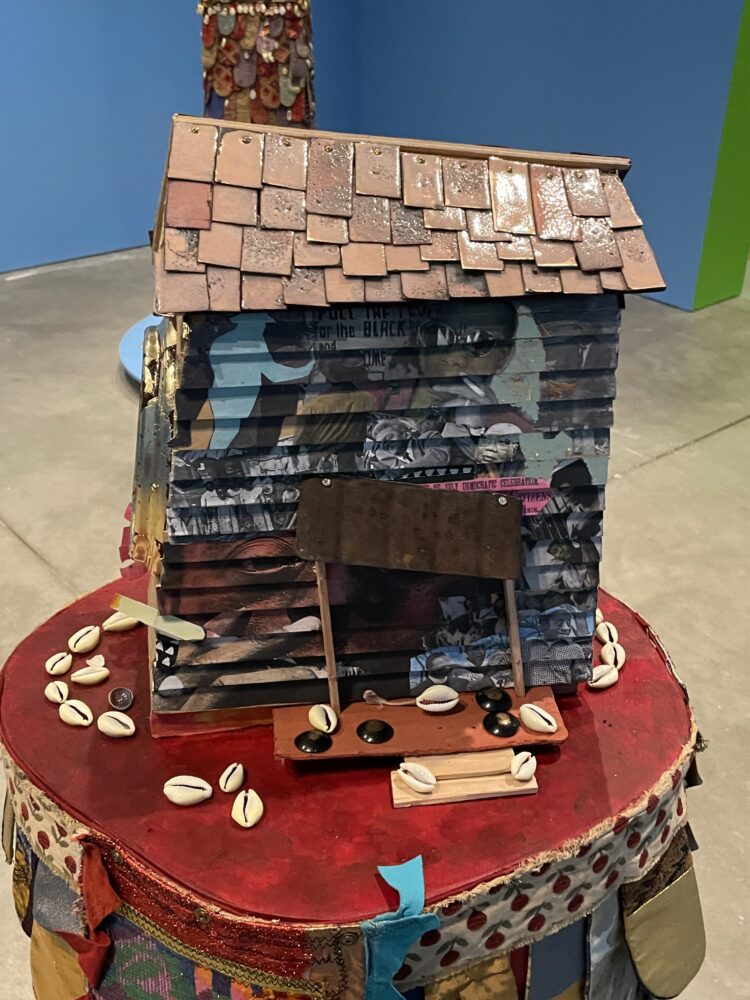
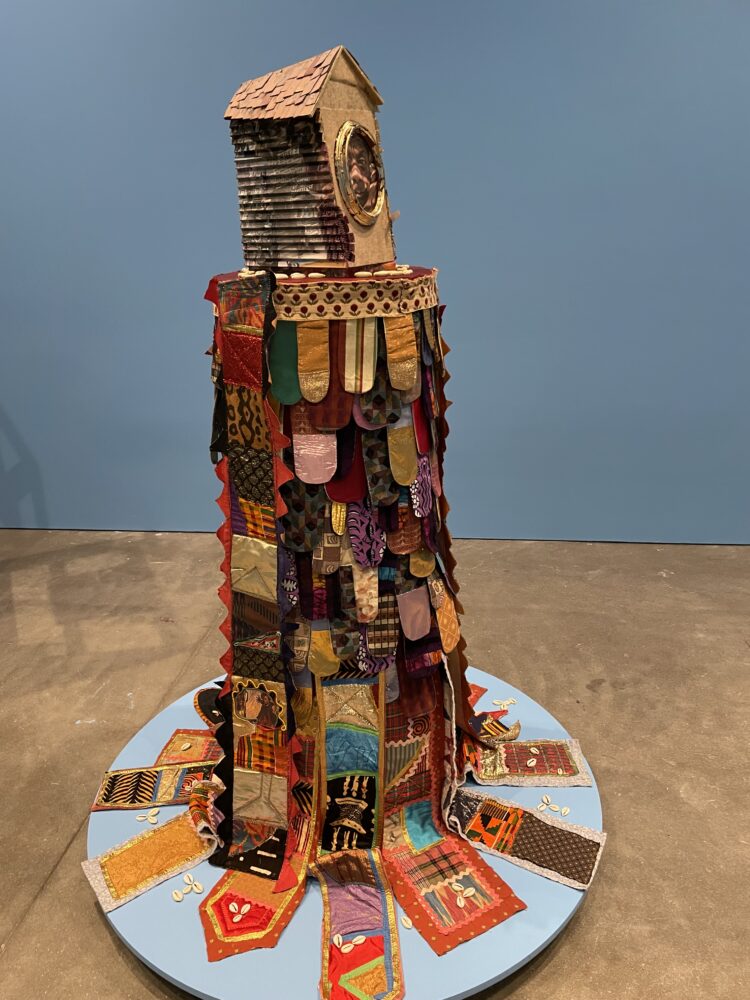
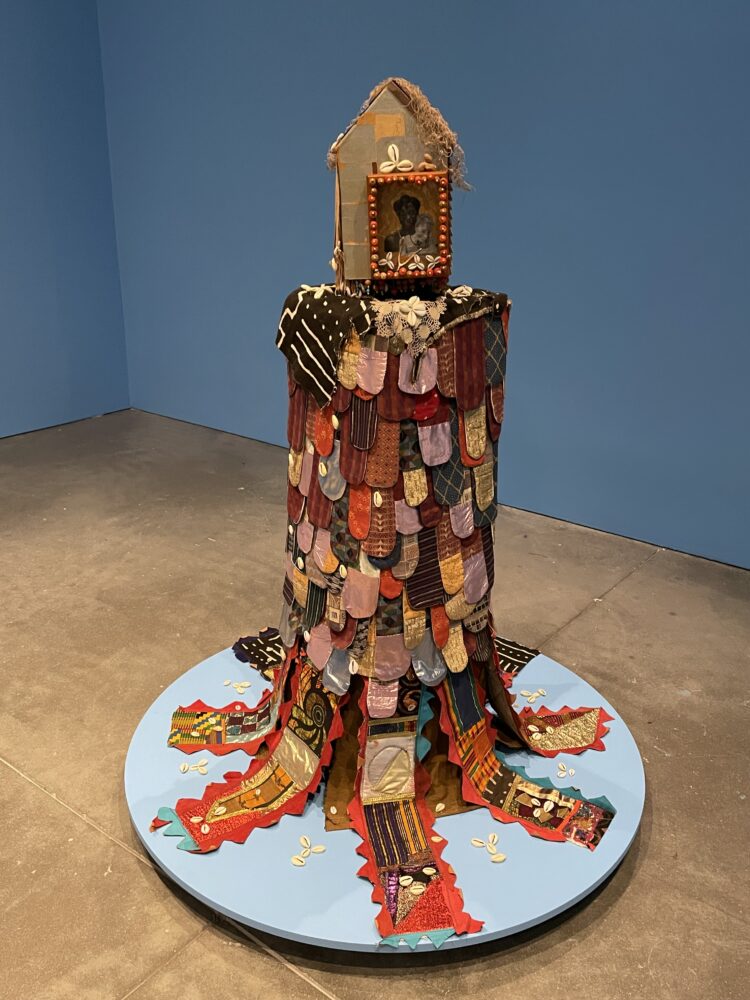
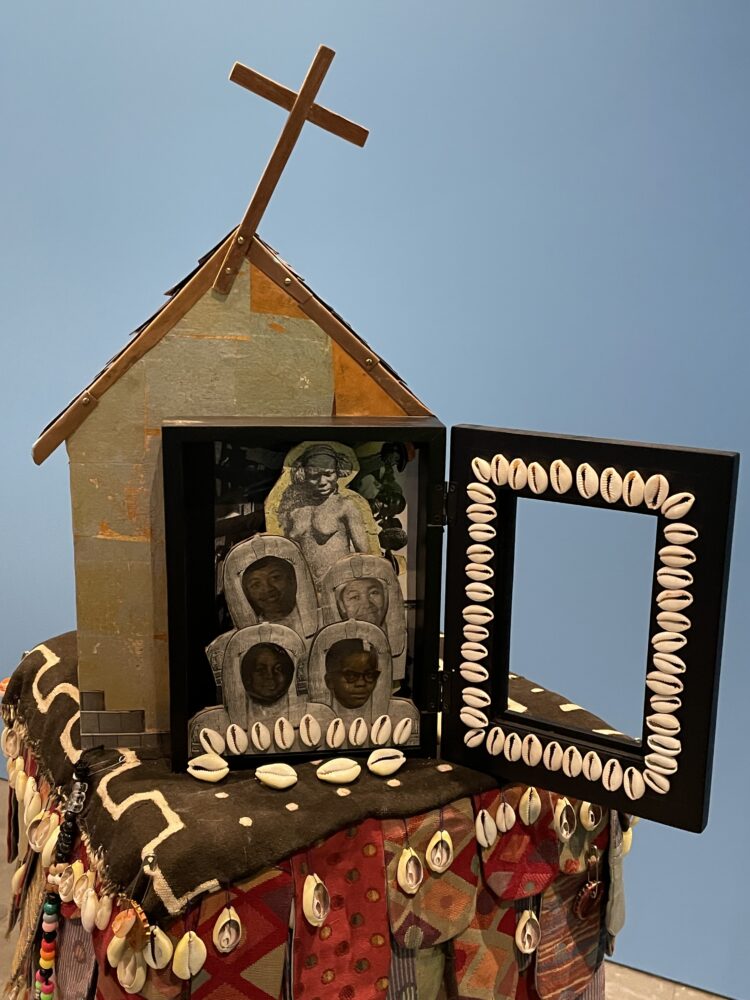
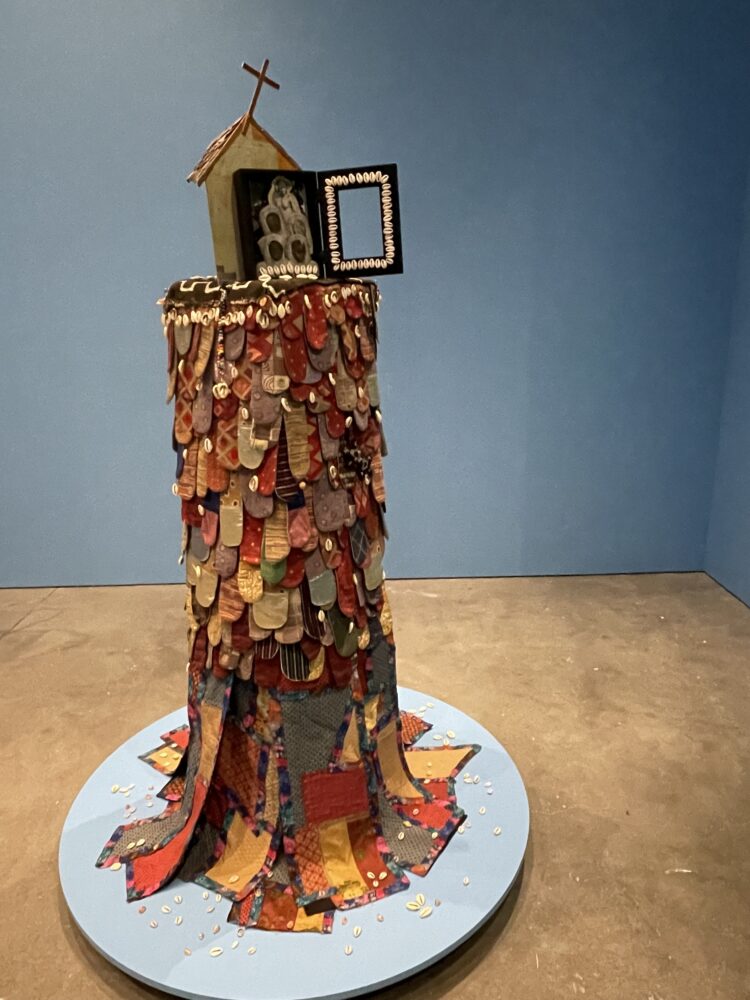
“Jones-Henderson’s practice stretches profoundly around what it means to be human. His interdisciplinary work engages with a spiritual and cultural continuity, which finds strength in the African-American experience. For Jones-Henderson, being an artist is defined by being connected with others, and he is an incredibly generous collaborator, community social activist, and inspirational mentor.” – Juror Martina Tanga
Napoleon Jones-Henderson was born in 1943 in Chicago, Illinois. Jones-Henderson attended the Sorbonne Student Continuum-Student and Artists Center in Paris, France in 1963 where he was immersed in an independent study program in French Art History and Figure Drawing. Upon returning to the United States, earned his B.F.A. degree in 1971 from the Art Institute of Chicago and a M.F.A. degree in Interdisciplinary Arts from the Maryland Institute College of Art in 2005.
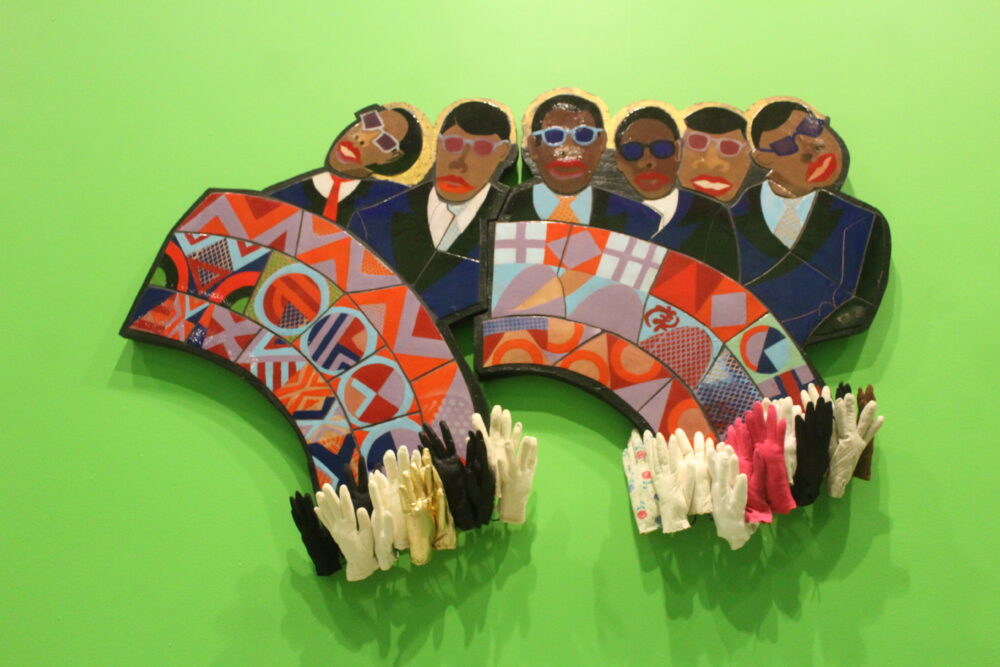
In 1968, during the apogee of the Chicago Black Arts Movement, Jones-Henderson became a member of the Chicago-based artists’ collective COBRA (Coalition of Black Revolutionary Artists) then changed its name in 1969 to AfriCOBRA (African Commune of Bad Relevant Artists). During the formative years of AfriCOBRA, Jones-Henderson created large pictorial woven tapestries that were included in the group’s important series of exhibitions. In the early 1970s, exhibitions were mounted at the newly founded Studio Museum in Harlem and the Museum of the National Center of Afro-American Artists in Roxbury. Since 1969 to present is one of the longest continual active members of AfriCOBRA. In 2011, the documentary AfriCOBRA: Art for the People produced by the TV Land Network, chronicles the history, and celebrates the contributions of AfriCOBRA to the 1960s Black Arts Movement.
Over the course of his career, Jones-Henderson has served in various academic positions at Malcolm X College in Chicago, Massachusetts College of Art, Emerson College in Boston, Roxbury Community College, Vermont College of Norwich University; in 2005, he was appointed associate professor of art at Benedict College in Columbia, SC, Syracuse Uni., Syracuse, NY.
Jones-Henderson is Executive Director of the Research Institute of African and African Diaspora Arts, Inc., BENNU ARTS, LLC. and received awards, for his artwork, and curatorial efforts championing Black Art internationally; 2025-26 CARA Fellowship, 2015 Boston Foundation’s “Brother Thomas Fellowship”, the Merit of Honor Award from the Walters Art Museum in Baltimore. His artwork is in the collections of, City of Boston, State of Massachusetts, Museum of Fine Art. Boston, DuSable Museum of African American History, Schomburg Center for Research in Black Culture, Hampton University Museum, Brooklyn Museum of Art, Museum of NCAAA and Studio Museum in Harlem and distinguished private collections and numerous public art commissions. Lastly, appointed to Boston Arts Commission 2025.
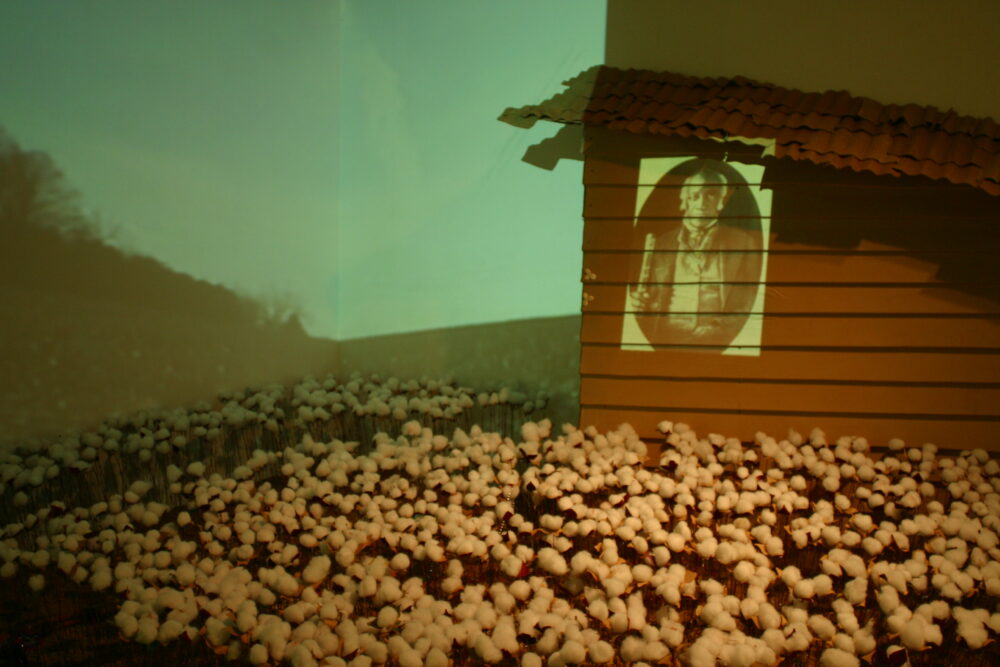
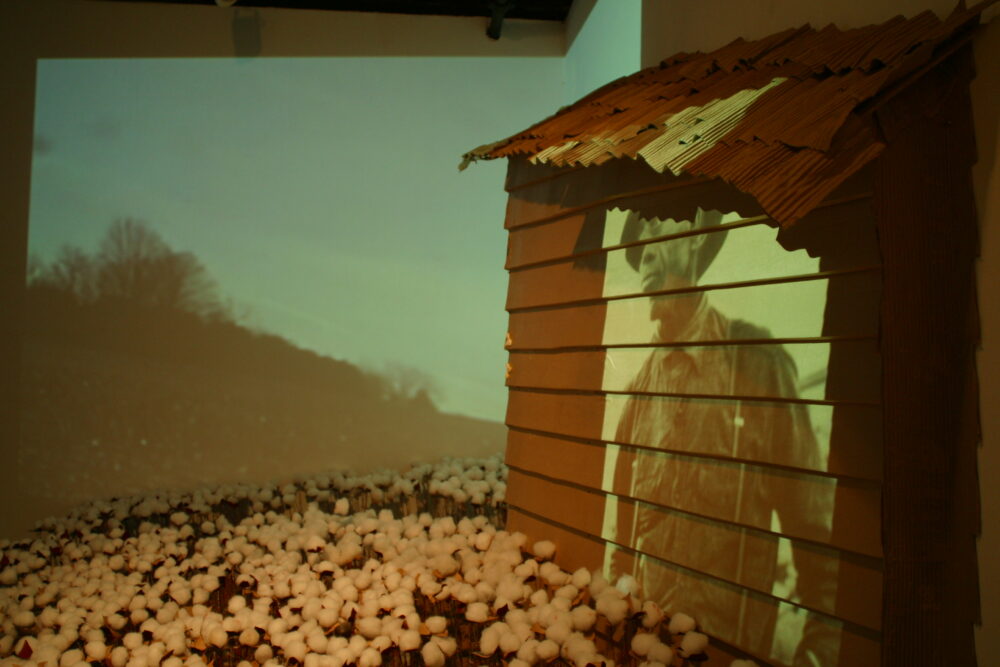
Reflections upon a journey into an expanded studio practice and the implementation of “Passed On: Requiem for Our Ancestors”
“For me struggle is the key ingredient, the fuel that drives the creative impulse. Struggle is and can be a wonderfully invigorating force for the artistic spirit. The sense of struggle and dedication has for all these creative years driven my creative impulse in using Images (Art) as an agent for change.
However essential struggle is to my work, it is not overwhelming. I wish my work to engage the viewer in such a way, they are moved to become a better person, become enveloped in the beauty and joy of life that comes through struggle, as opposed as is too often the case, the sometimes debilitating struggles of life. Yes, life is a struggle, but a joyous one.
This sense of struggle has always moved me to investigate issues and situations in such a way it invariably becomes the fuel that has ignited my work. As an Image-maker, I seek to create work that moves people to a better place from where they are, when they first come upon my work.
The overarching source of my work is based upon the changes present in music, and music’s ever evolving colors, moods and rhythms. Ultimately, I am endeavoring to embody my work with what I call ‘visual music,’ a syncopated rhapsody of colors, shapes, symbols, and rhythms that stimulates the senses, awakening one’s spirit, and uplifting Humanity.”