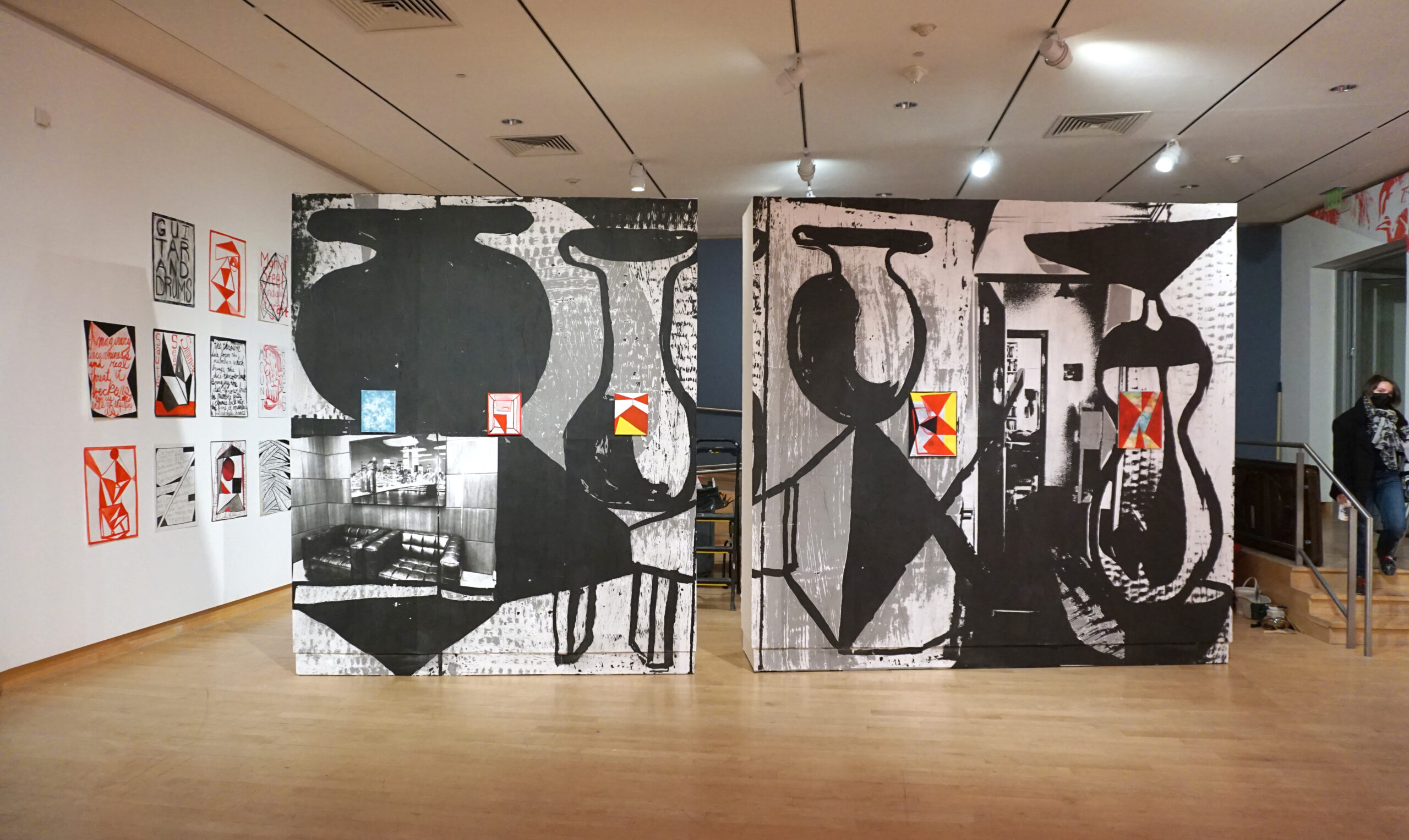
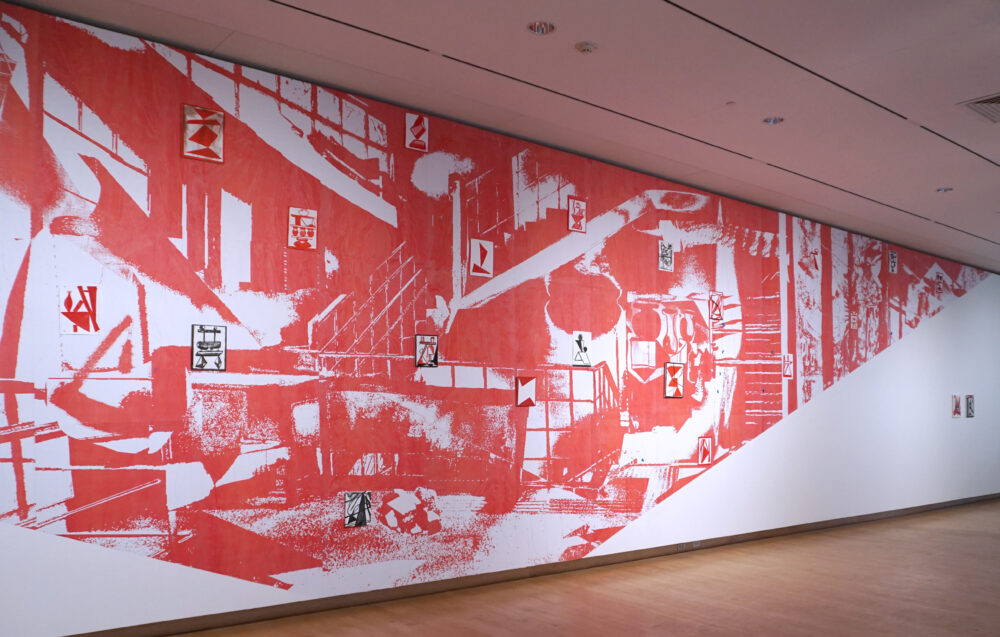
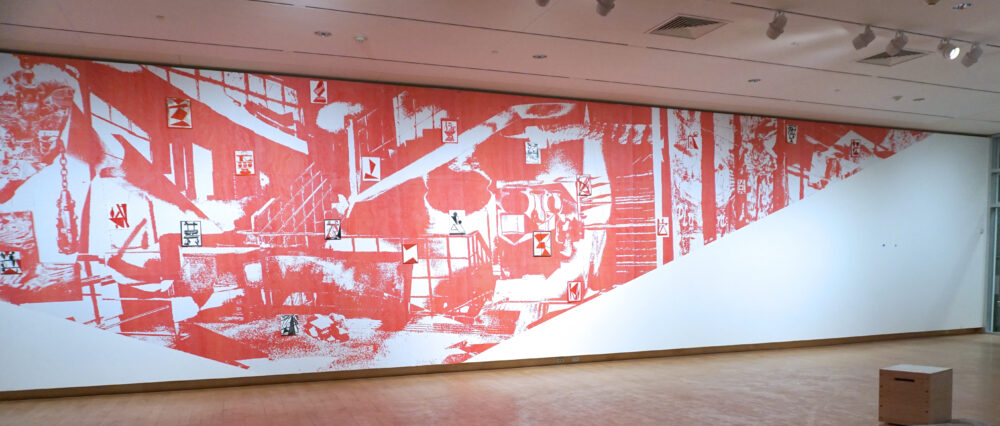
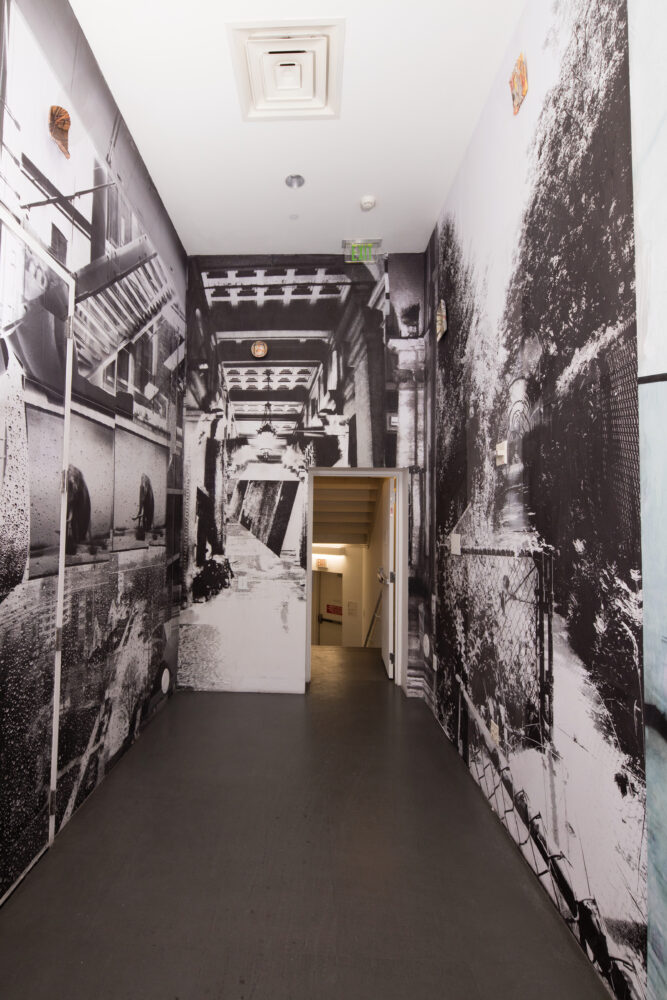
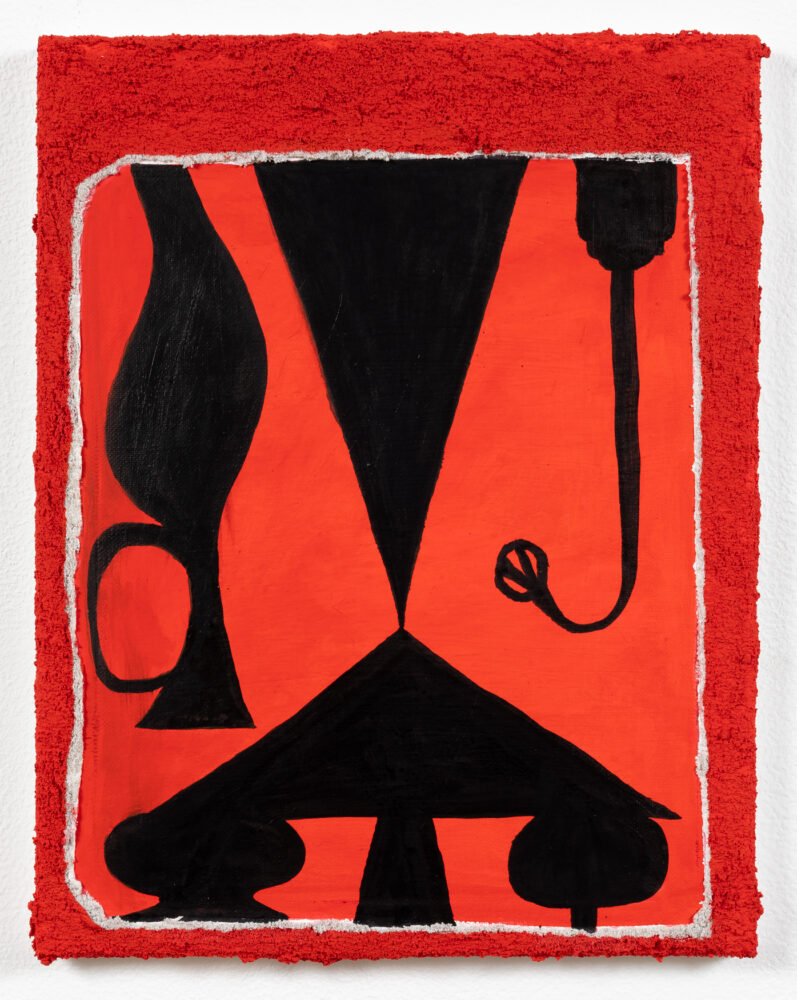
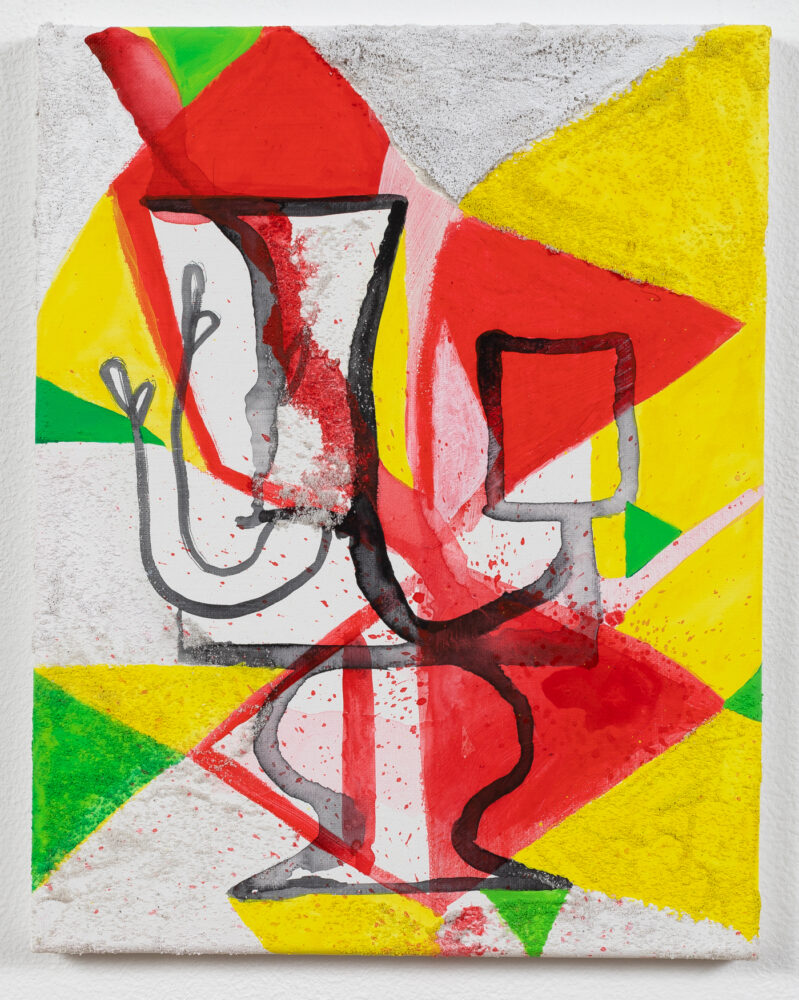
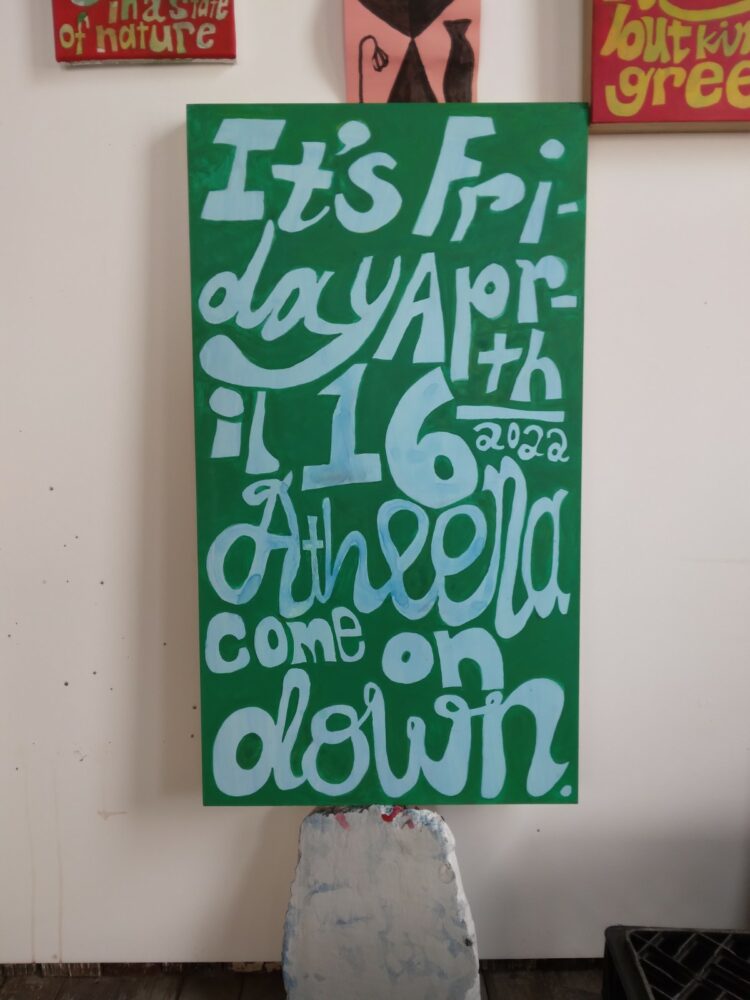
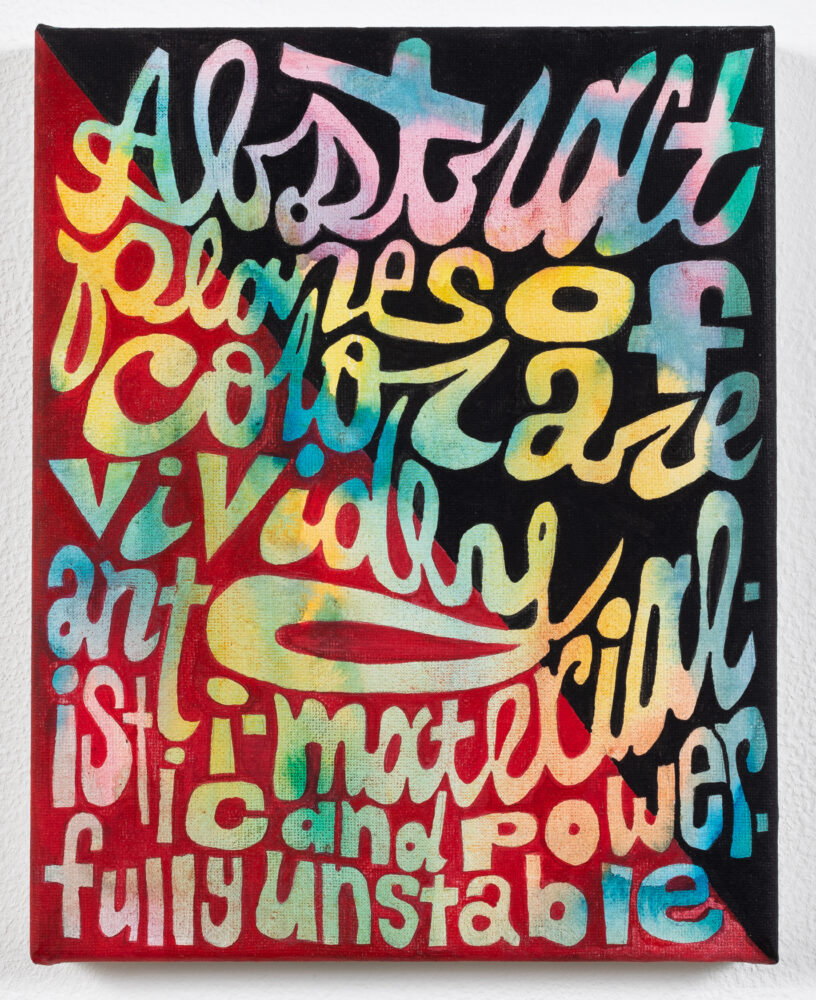
Argentinean born, artist Santiago Cucullu creates multi-media works that culminate in spatially unified installations. Often arranged with elaborate wall-sized murals, sculpture, and vibrant works on paper, Cucullu emphasizes the subtleties of intuitive pacing and spatial orientation experienced in his broad installations. Specifically, Cucullu creates works using a duality of materials and appropriation to indicate the oscillation and ability of objects to collapse on themselves while activating an exhibition space.
In a description of his work the artist Michelle Grabner comments: “a duality of materials and appropriation that indicate the oscillation and ability of the objects to shift between a given formal solution, and the ultimate collapsibility in the overall appearance of the work. This undermines the general hierarchy in the relationship between the institution, the viewer and the object.”
Specifically elements in the work reflect moments from everyday life that act to displace or highlight frictions that we encounter. Using imagery from one specific place to disrupt ideas of a uniformed reality by displacing representations of a particular culture into another. Allowing this representations to reside side by side to emphasize social fictions that are use to navigate different societal structures.
Cucullu currently lives and works in Milwaukee, Wisconsin and Boston, Massachusetts. He received his MFA from the Minneapolis College of Art and Design and his BFA from the Hartford Art School in Connecticut. A former resident of the Core Program at the Glassell School of Art, Museum of Fine Arts, Houston, Cucullu’s work has been exhibited at a number of institutions, including the Mori Art Museum, Tokyo; Whitney Museum of American Art, New York; Walker Art Center, Minneapolis; and Hammer Museum, Los Angeles, among others.