SaraNoa Mark

Artadia Awardee
,

“SaraNoa Mark’s work stood out for me as an exceedingly thoughtful exploration of the power of mark-making; their deceptively simple work contains far-reaching implications about place, the nature of collective memory, museum practice, and the post-colonial condition.” – Juror René Morales, James W. Alsdorf Chief Curator, MCA Chicago.

SaraNoa Mark (b. NY, NY) pursues a drawing practice that investigates traces left by time, as they exist in landscapes and in collective memory. SaraNoa’s work has been supported by a Fulbright research fellowship in Turkey. SaraNoa has received grants from Artadia, the U.S. Embassy Mission Grants Program in Turkey, Harpo Foundation, Luminarts Cultural Foundation, Foundation for Contemporary Art, John Anson Kittredge Fund, Illinois Arts Council, Department of Cultural Affairs and Special Events Individual Artists Program (DCASE), West Collection, Chicago Artists Coalition, and a Pennsylvania Academy of Fine Arts Travel Scholarship. SaraNoa has been an artist in residence at Skowhegan School of Painting and Sculpture, Lower Manhattan Cultural Council, Chicago Artists Coalition, Montello Foundation, Wave Hill, Jackman Goldwasser Residency at the Hyde Park Art Center, and the Bronx River Art Center. In 2025 SaraNoa will be an artist in residence at Yaddo, the Josef and Anni Albers Foundation, and Dieu Donné. SaraNoa co-directed the 4th Ward Project Space in Chicago from 2017-2023. Recent exhibitions of their work have taken place at the Chicago Cultural Center, Chicago, IL; Daniel Faira Gallery, Toronto, CA; The Institute of Contemporary Art at Maine College of Art, ME; CA; Davis & Langdale, NY; Dreamsong Gallery, Minneapolis, MN; 5533, Istanbul, among others. SaraNoa was named a Newcity magazine Breakout Artist in 2021. Mark’s work has been reviewed in Hyperallergic, ARTNEWS, ArtAsiaPacific, BOMB Magazine and more.

SaraNoa begins with questions: How do they evidence invisibility? How do they archive the presence of absence? When do they feel inside time? How do they hold memory? How quickly can they walk on cement, how slowly do they walk on sand? Do they feel part of place or surrounded by place? If they could restore one place what would they restore? How does the wind draw? How does water draw? How do they draw endlessness?

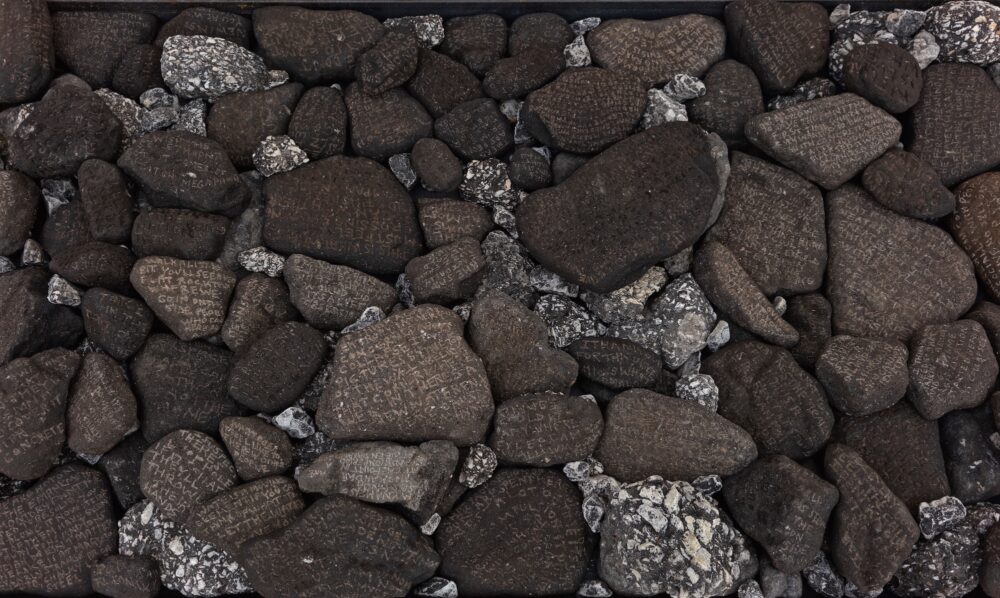
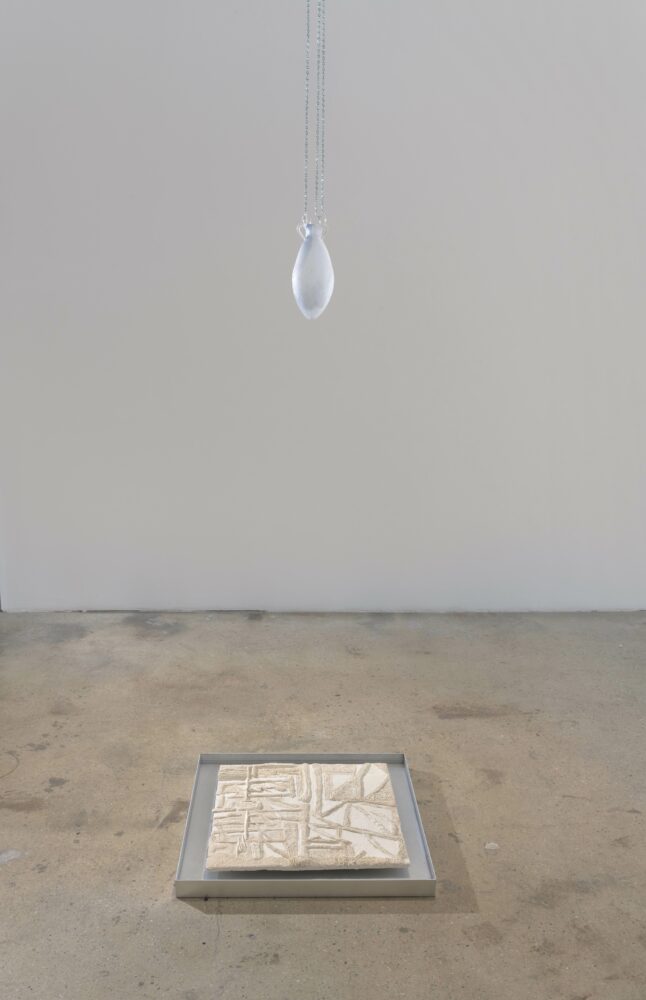
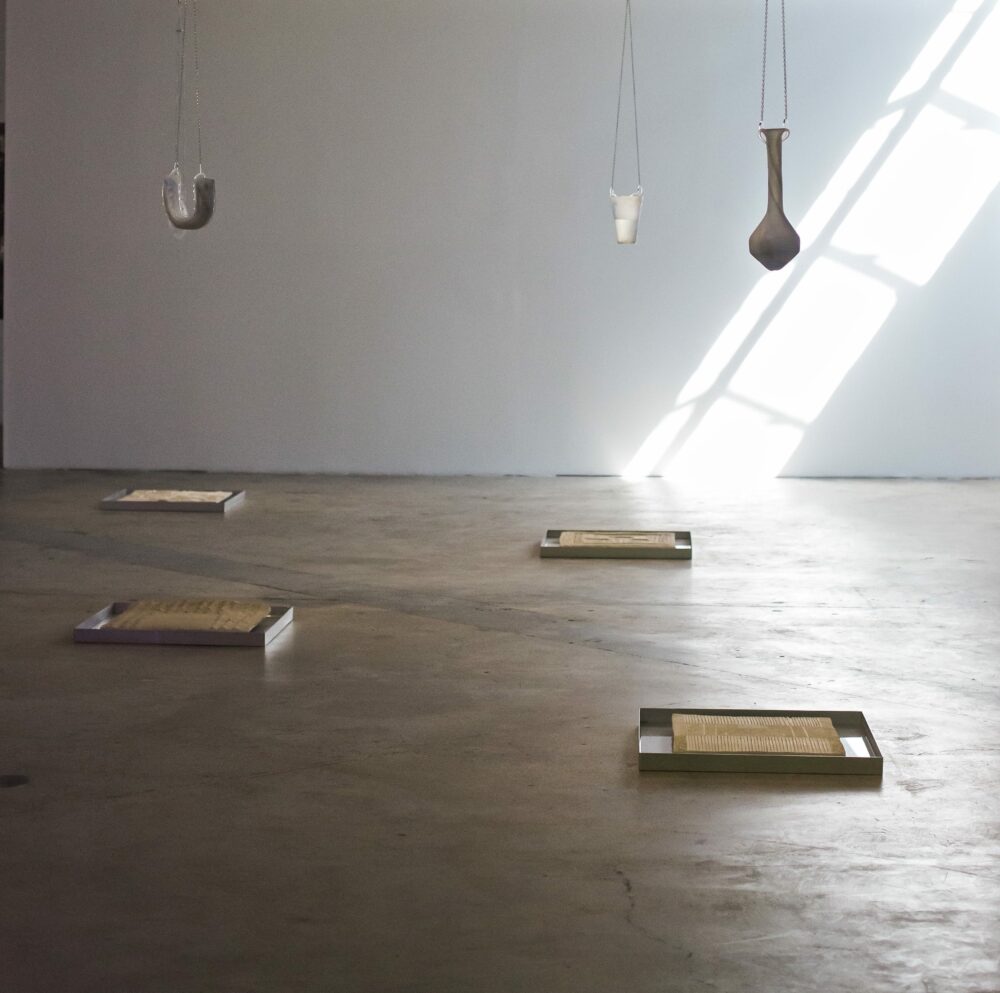
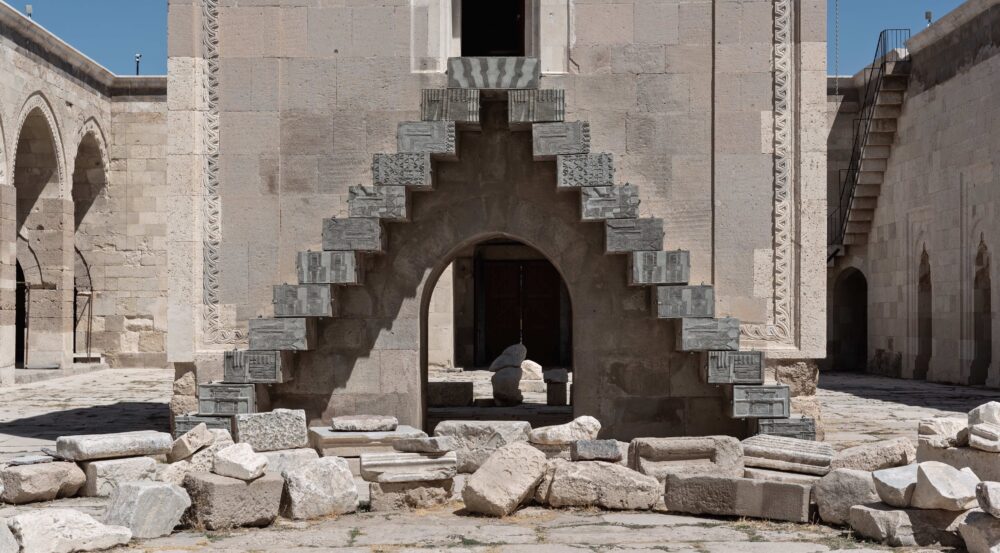
Thier practice examines traces left by time, in landscapes and in collective memory. They work with enduring materials such as clay, stone, and glass to explore permanence and erasure, and employ subtractive gestures to archive the presence of absence. In their sculptures, time is counted slowly, through repeated gestures. These marks accumulate in works that form a physical accounting, providing an alternative means of measuring temporality outside the system of commodified time.

Carving is at the core of SaraNoa’s practice. They view the earth as a drawing, continuously drafted by environmental and human gestures: a wave tracing a long, curved line across the sand each time it meets the shore; the slow drip of a stalactite building one column over 10,000 years; the imprint of a sleeping body upon a bed. An aerial view of an archeological excavation makes this clear: existence is drawing; drawing is existence.

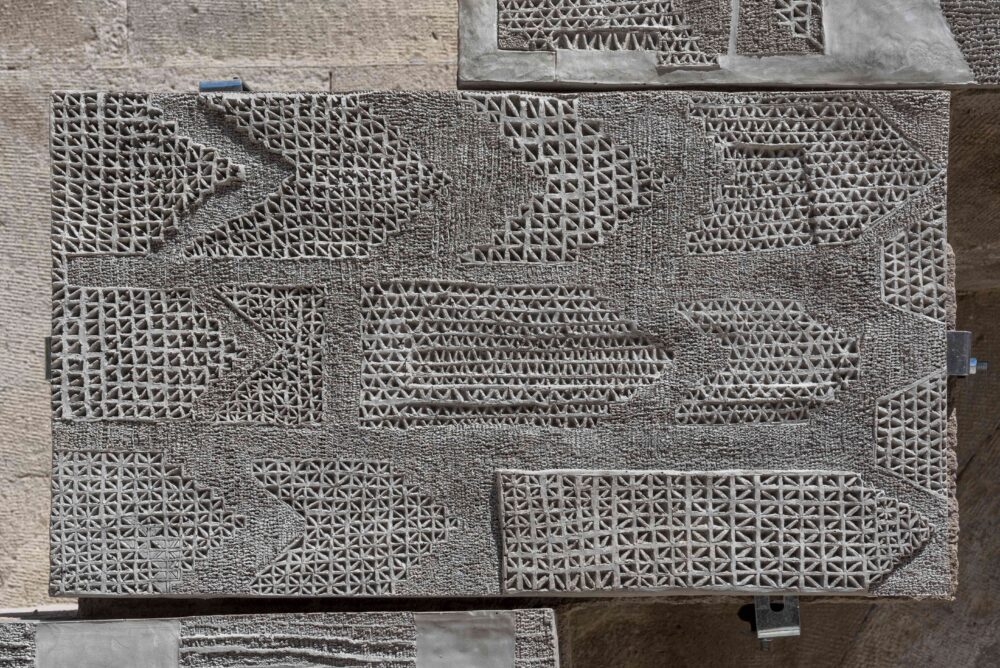
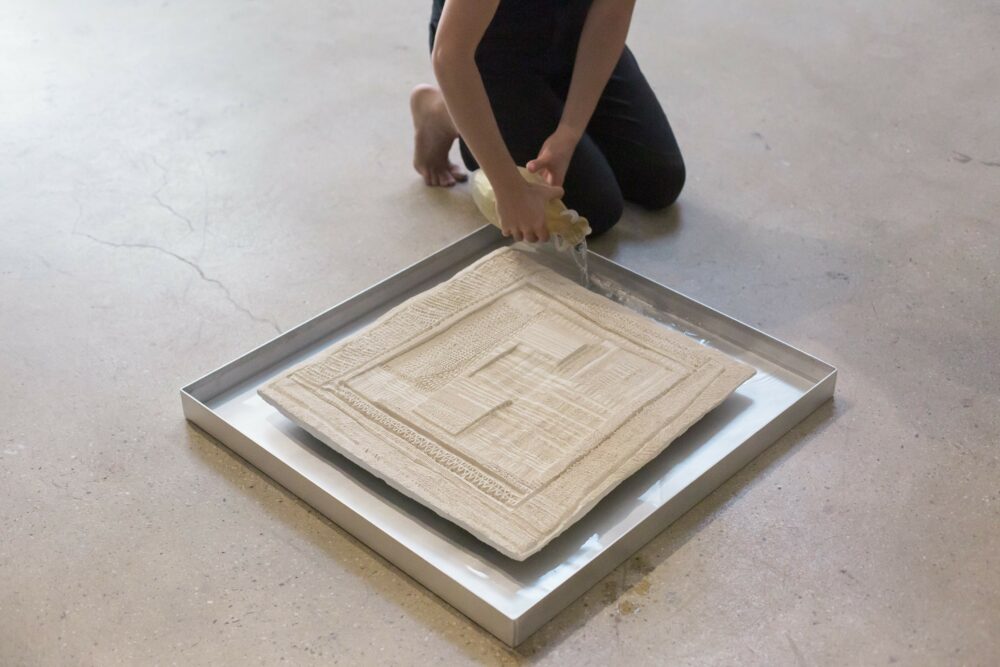
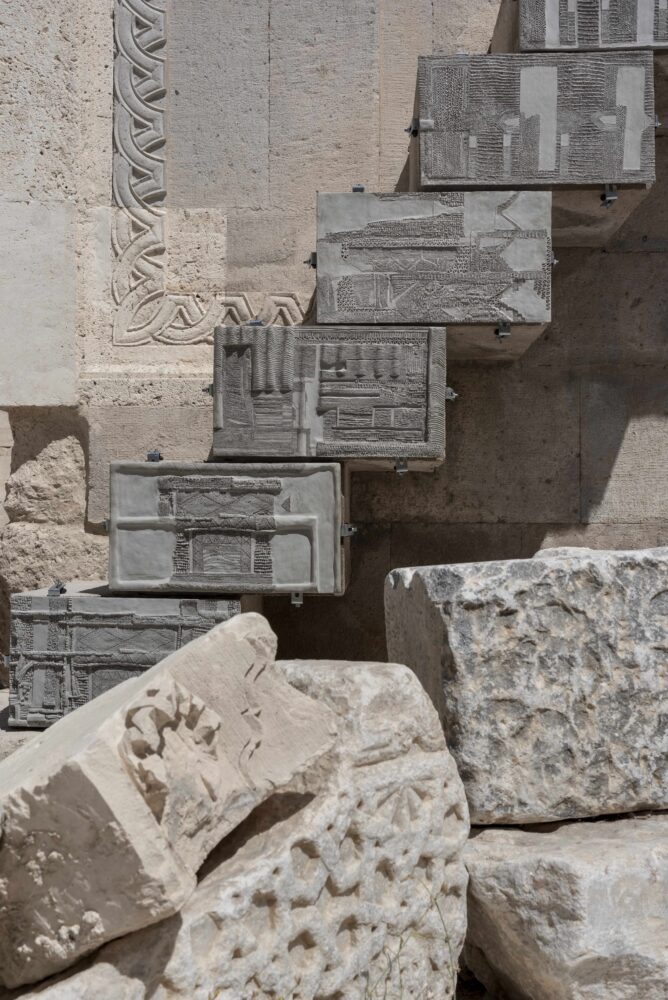
Their carving method is a subtractive process through which they inscribe labor-intensive renderings of removal. They work with a set of carving tools with chisels, gouges, and veiners that act as an alphabet of an expanding language. They aim to enter into conversation with the vast global tradition of carved reliefs, ranging from sidewalk graffiti to cuneiform tablets.

Employing texture as a primary medium of artistic communication, SaraNoa seeks to entirely transform their materials by stringently reworking that which already exists, whether in clay, stone, or fiber. Discovering the potential in that which is already present becomes an endless exploration. They are committed to creating a physical encounter with the viewer. The works request closeness, beckoning the body. An invitation to slow down, through a visual language that is as much about touch as it is about sight.

The questions driving SaraNoa’s work interrogate personal and cultural investments in turning to materiality as a means of transmitting memory. They interrogate this impossible instinct to preserve and retain intangible experience by transferring onto objects the task of surviving time. Making art is their method of becoming a witness.
www.saranoamark.com
Instagram